DIOGO PIMENTÃO • PRESENCE
OPENING: THURSDAY 16 APRIL 2026 (6PM-9PM)
EXHIBITION FROM 16 APRIL TO 23 MAY 2026
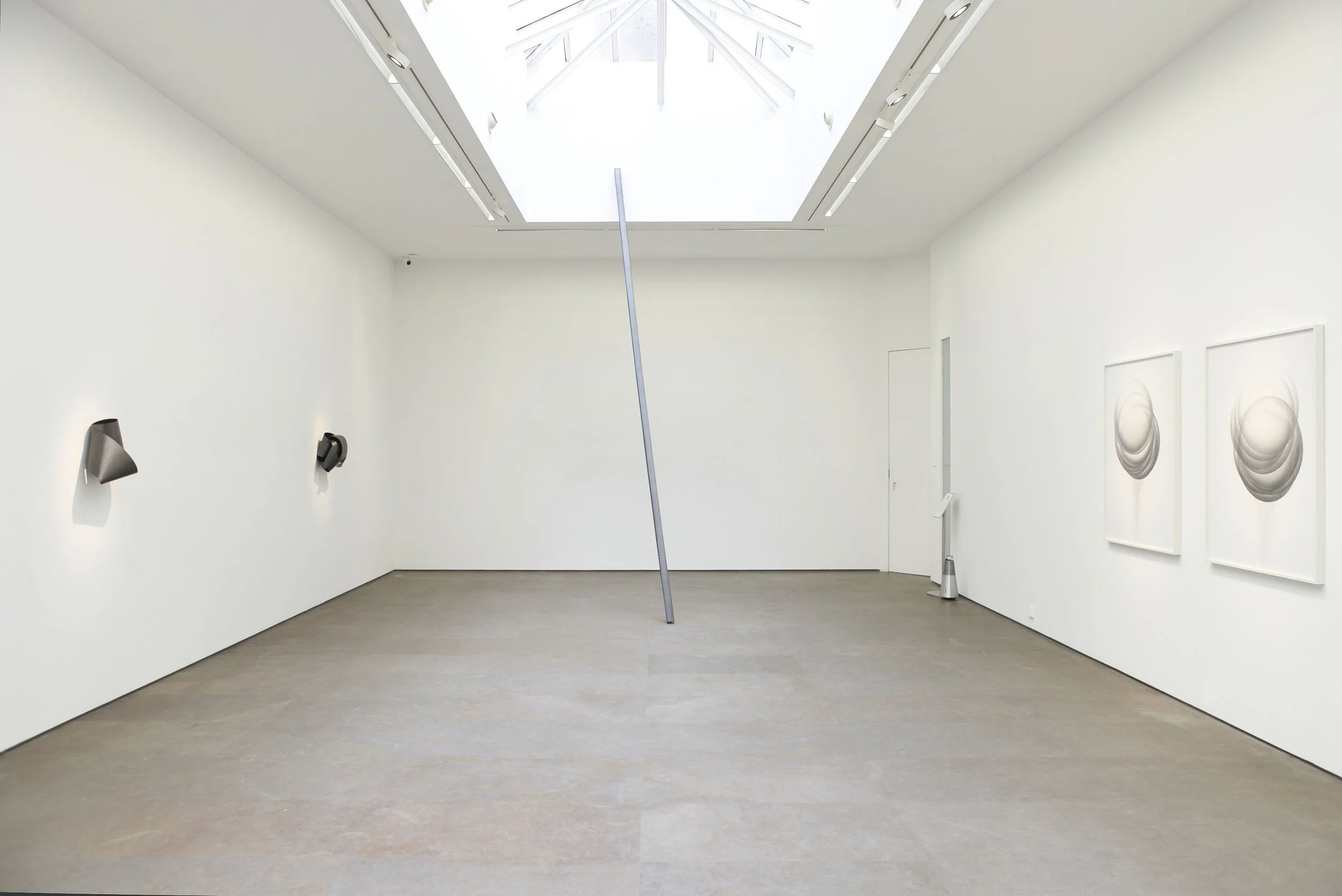
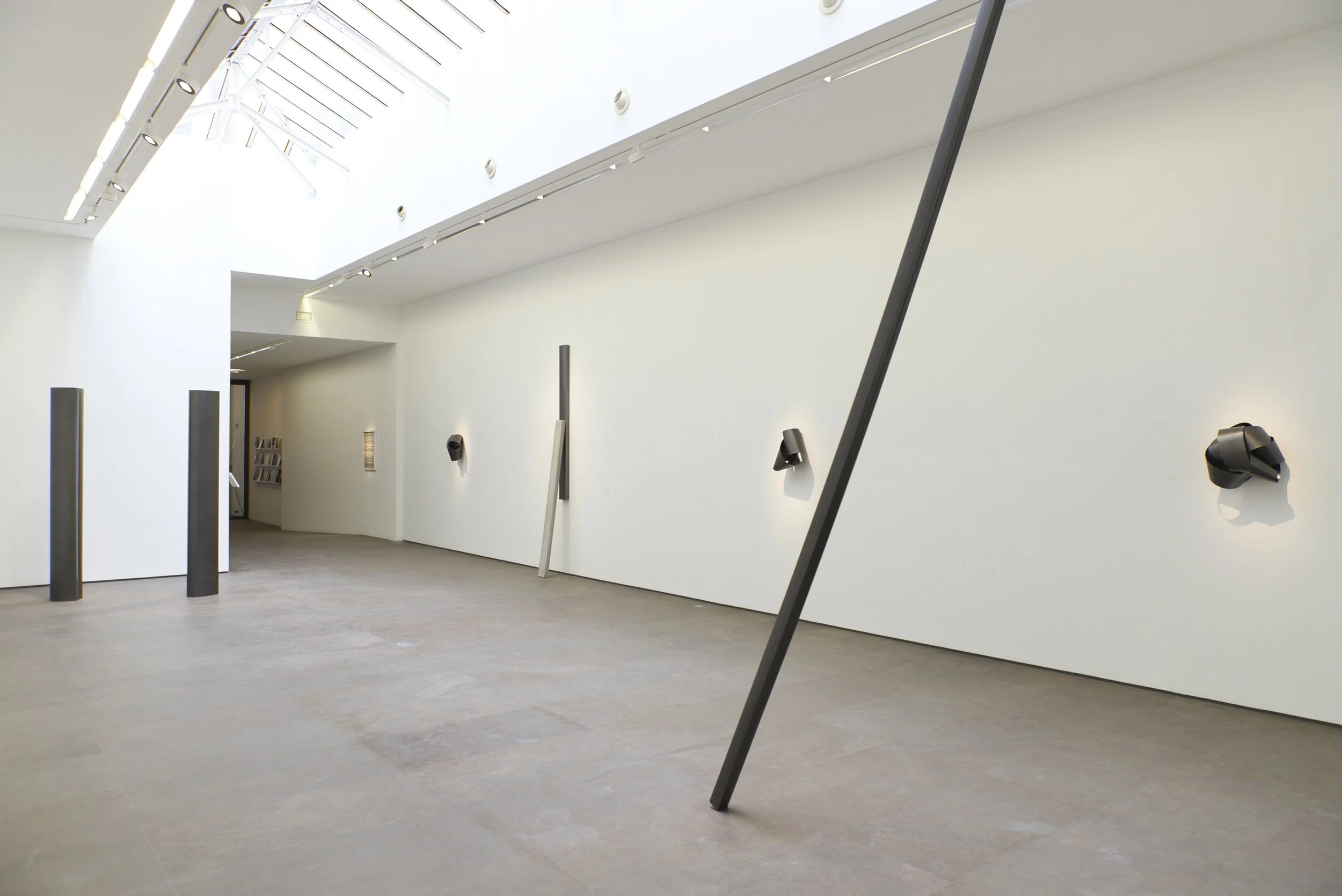
At first glance, drawing appears to belong to the most intimate of gestures: a line traced on paper, a mark emerging in silence, closer to writing than to any outward or physical endeavor. Yet in the work of Diogo Pimentão, drawing exceeds this condition. It unfolds in space, engages the body, and occupies the architecture that surrounds it. For his first solo exhibition at Bigaignon, entitled “Presence”, Diogo Pimentão invites us to consider drawing not only as an object to be seen, but as something that acts, resonates, and takes form.
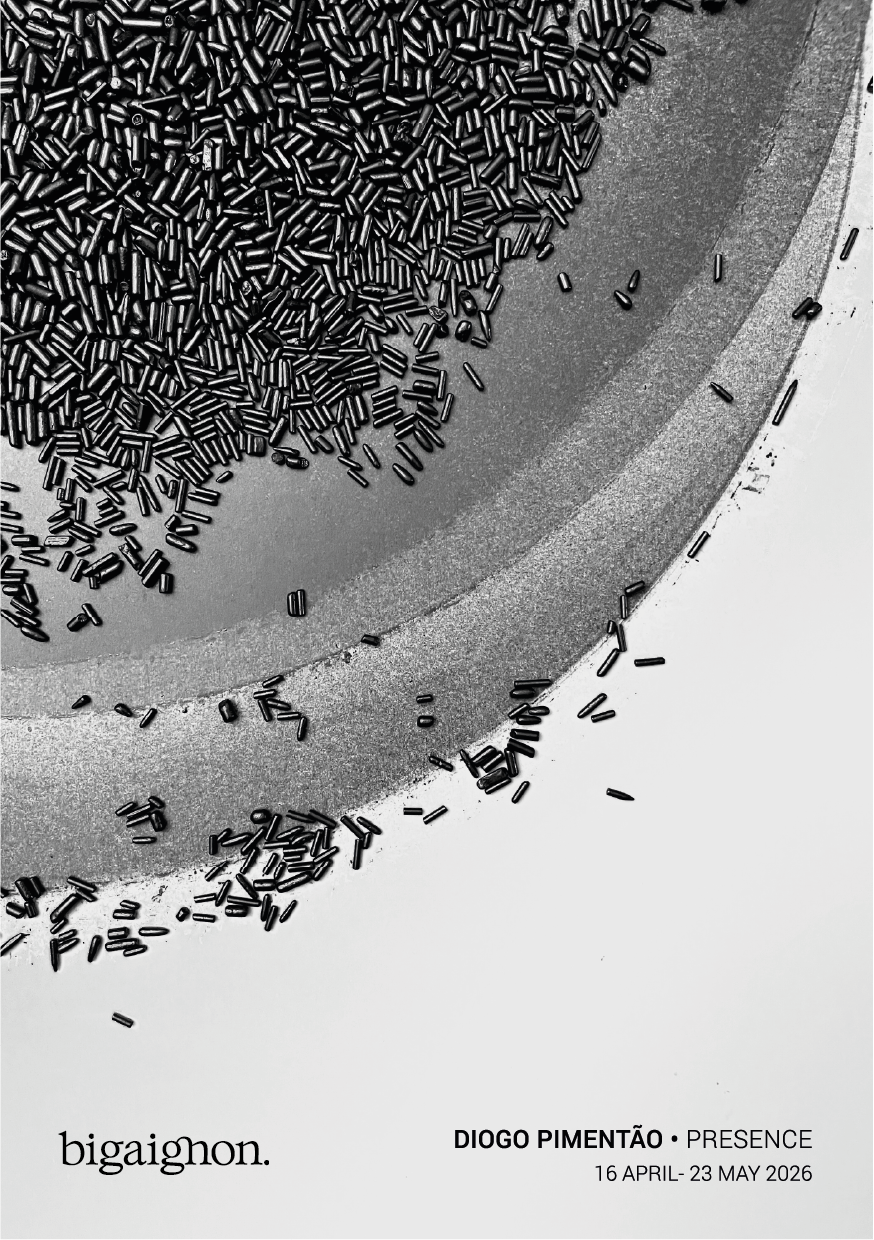
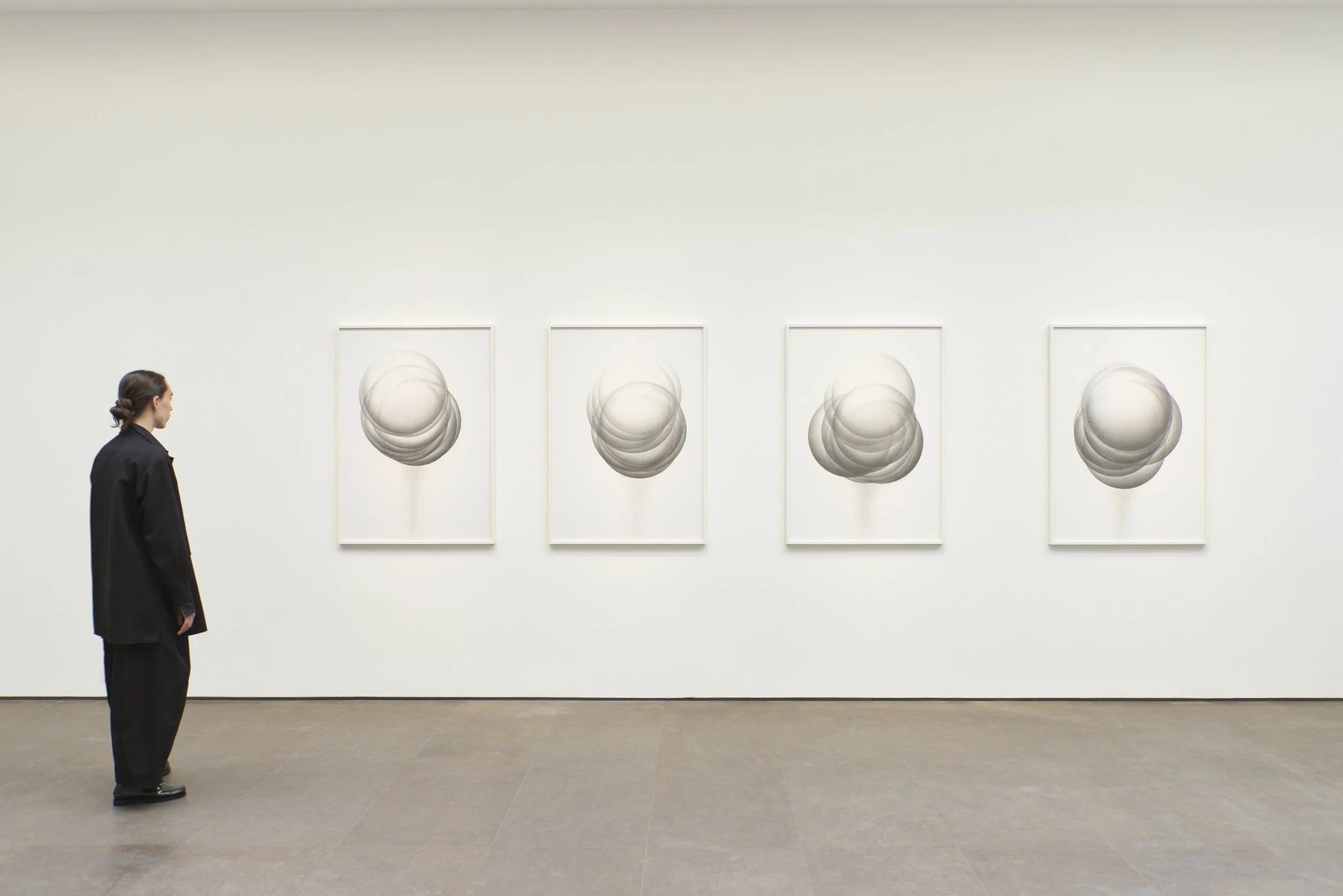
Raised on the Portuguese coast, Pimentão developed an early awareness of natural forces and material transformation. His practice carries this sensibility: graphite is not merely a tool but a substance, accumulated, displaced, and reconfigured through repeated gestures. These gestures, sometimes controlled, sometimes relinquished to chance, leave dense deposits on paper, building surfaces that seem to acquire weight and volume. What appears metallic is not intended as an illusion; rather, it is the result of material insistence. Like sand gathering into a dune, graphite reveals its capacity to transform through accumulation.
Color-blind, the artist navigates the world through tonal shifts, textures, and gradations. His works reflect this perceptual reality: they resist fixed categories and instead propose a continuous passage between states (between surface and volume, drawing and sculpture, fragility and strength). Our encounter with his work is less about representation than about presence, grounded in the tactile and the perceptual. Though rooted in drawing, Pimentão’s practice continuously tests its limits. Paper and graphite, humble, familiar materials, are subjected to processes that are at once rigorous and open-ended. Repetition, procedural actions, and even blindness become generative strategies, allowing the work to emerge through a dialogue between intention and unpredictability. Line becomes structure; trace becomes form.
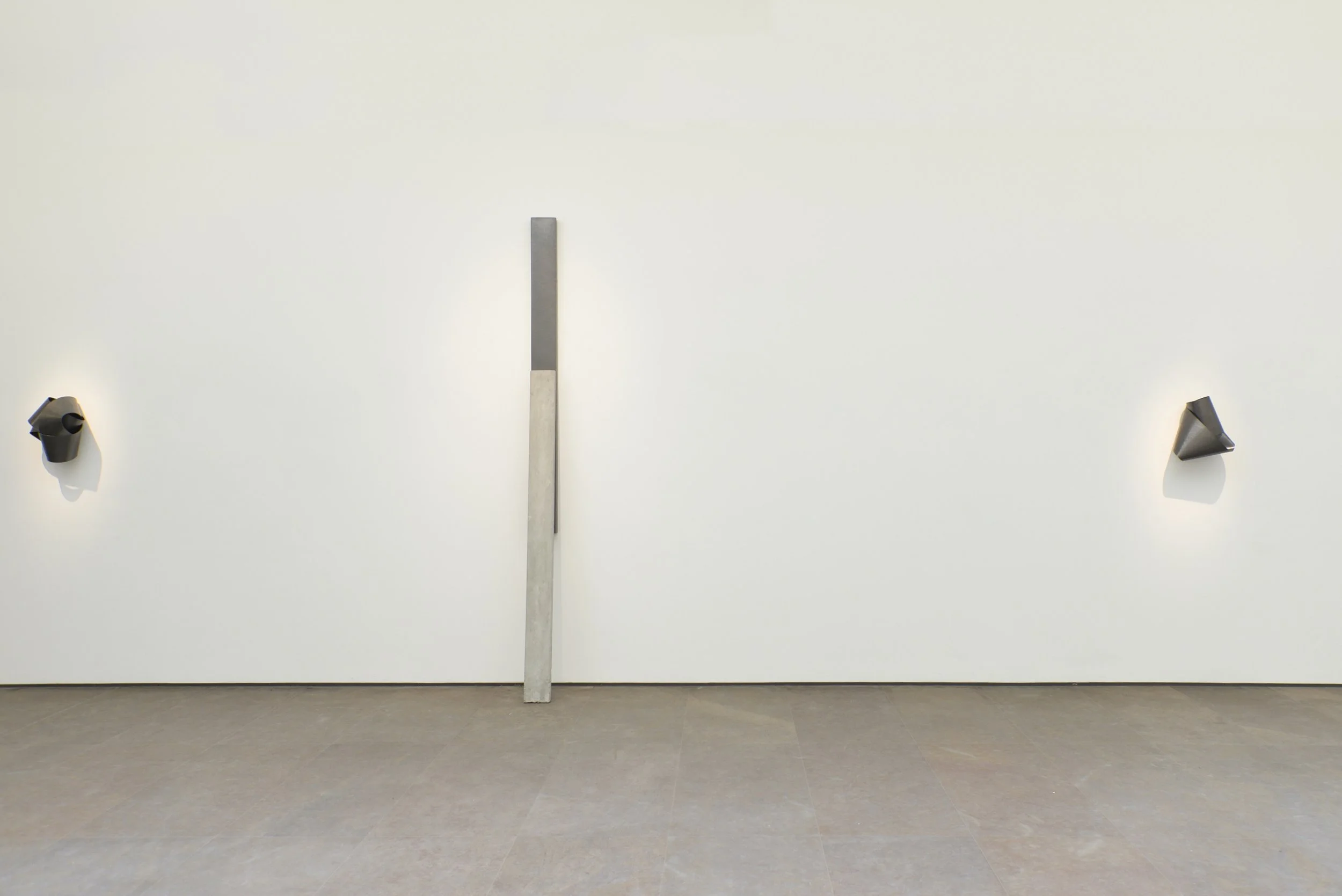
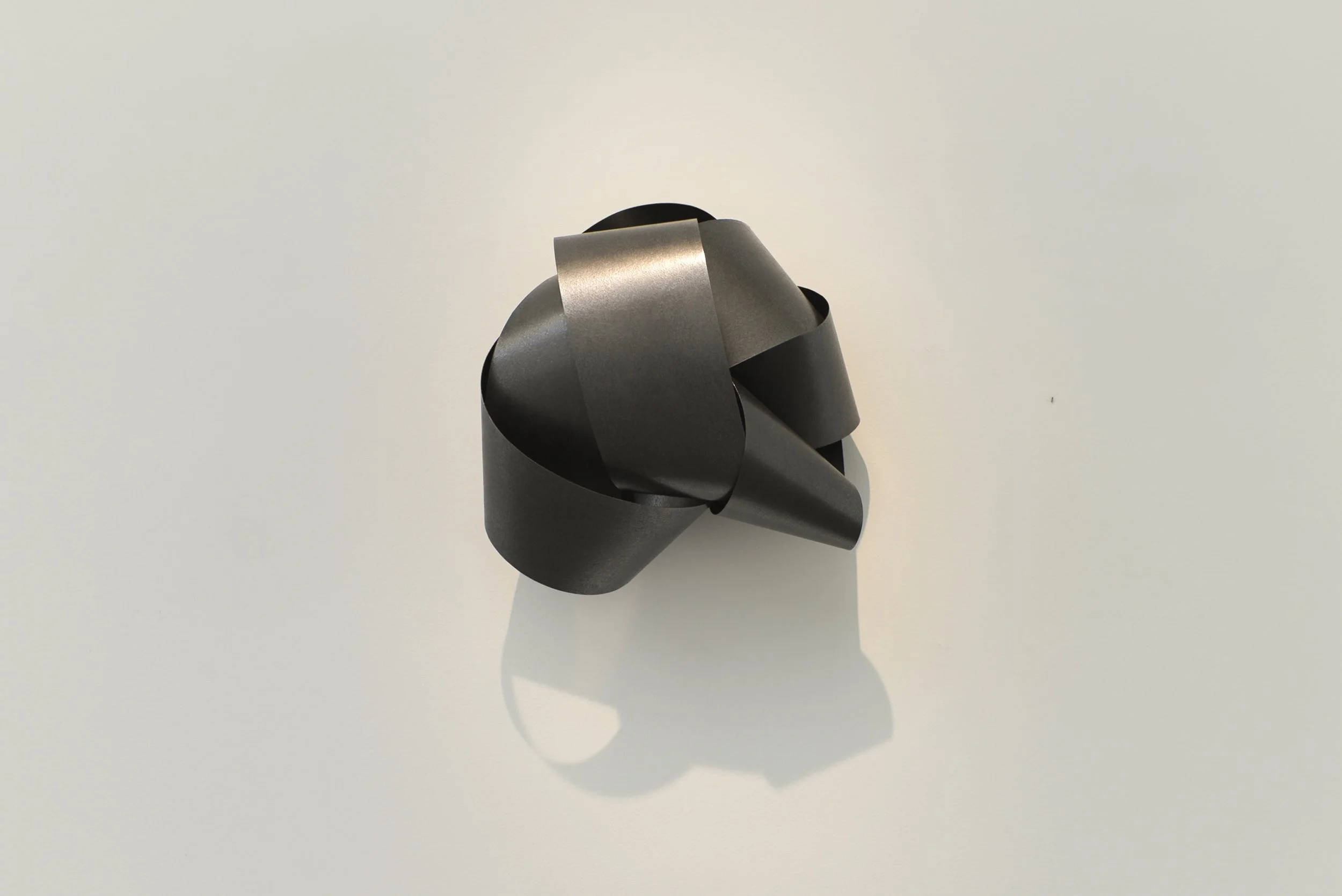
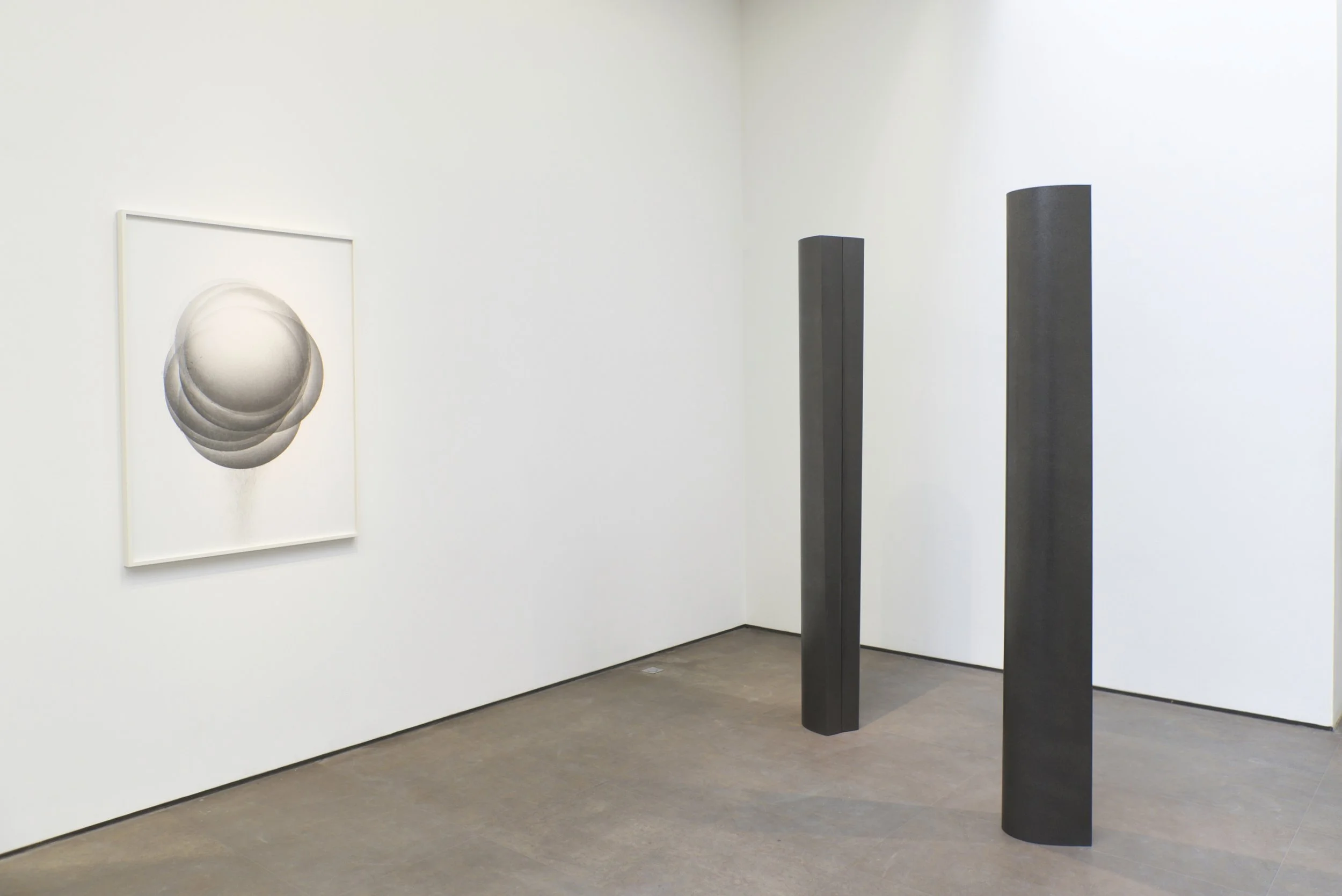
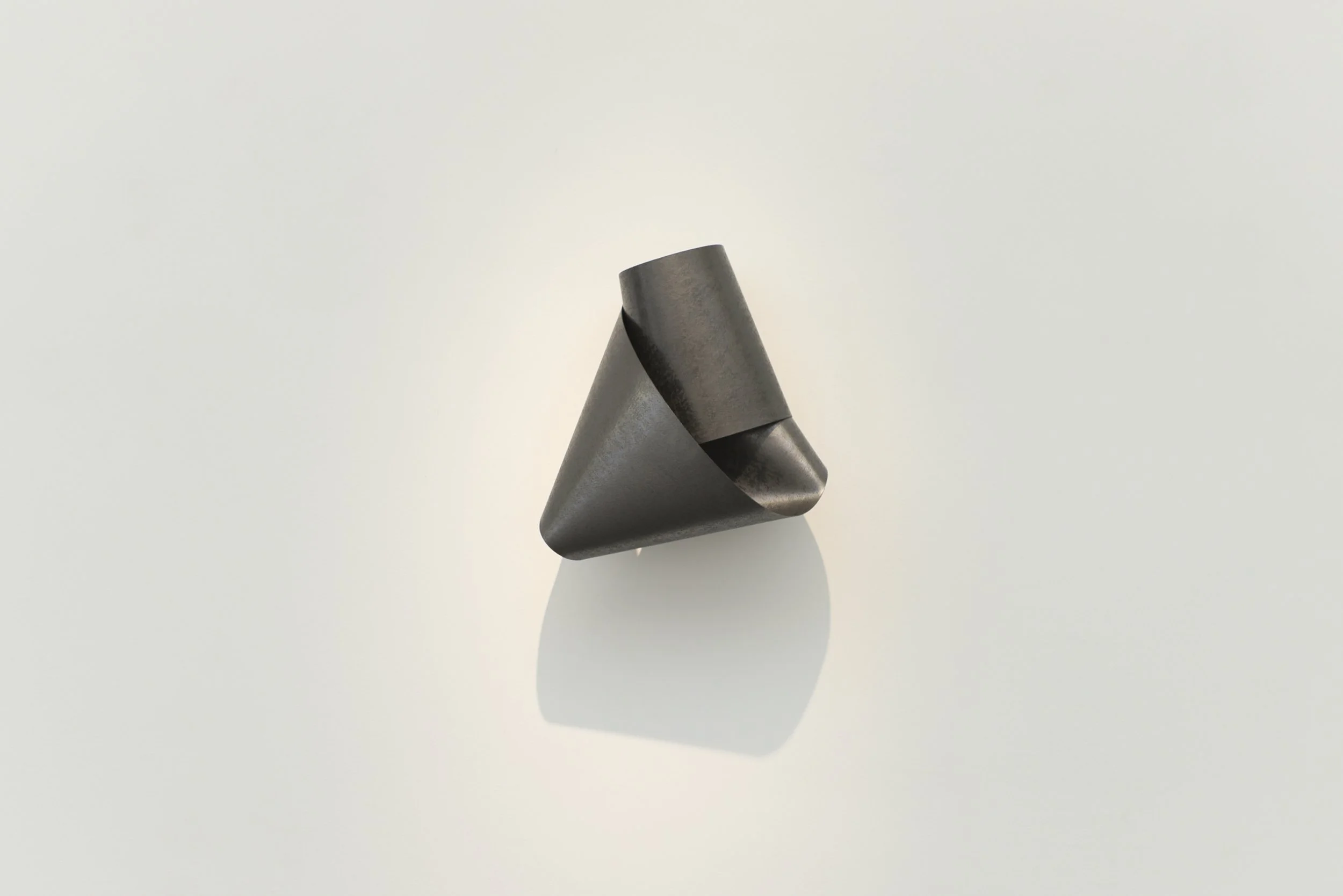
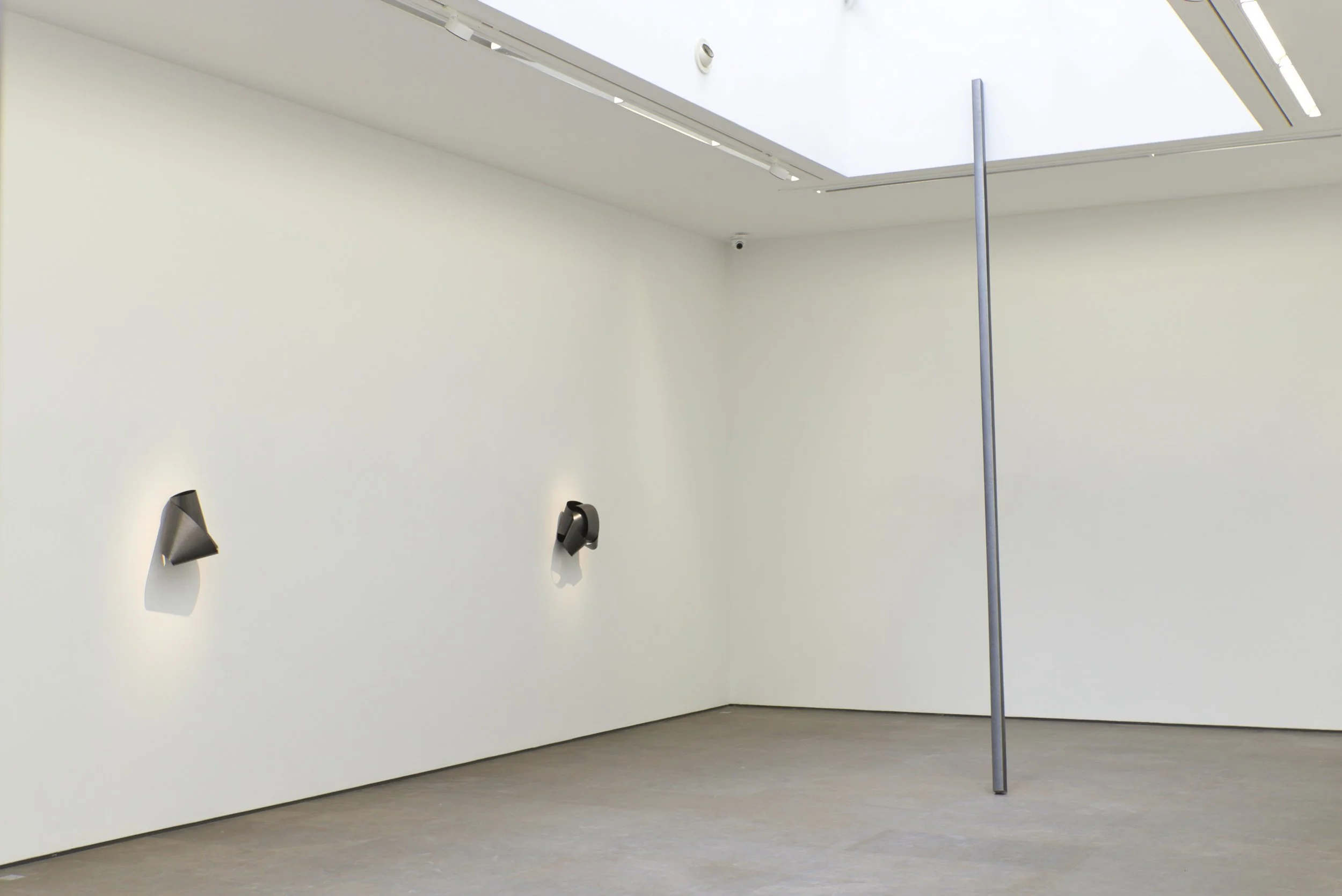
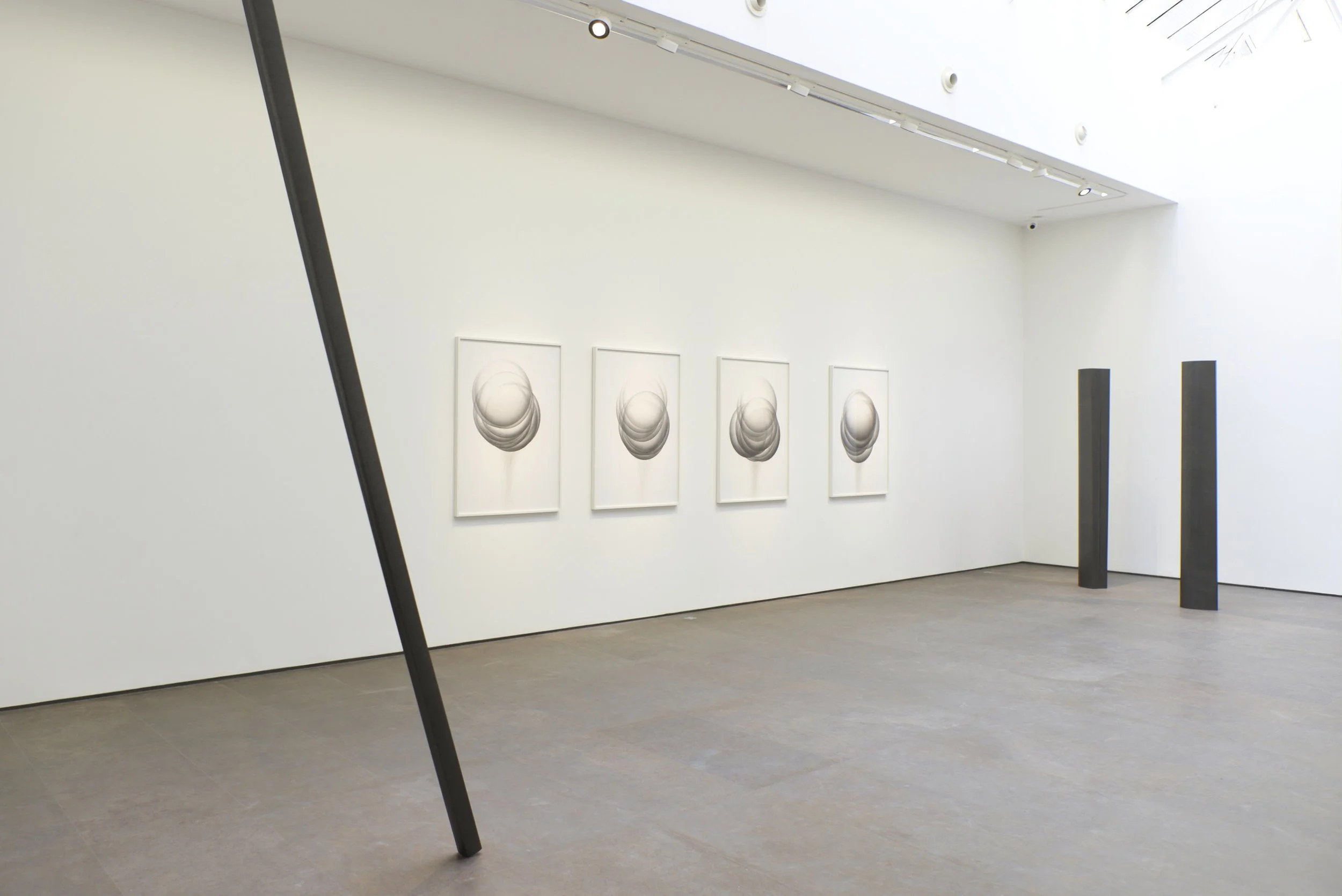
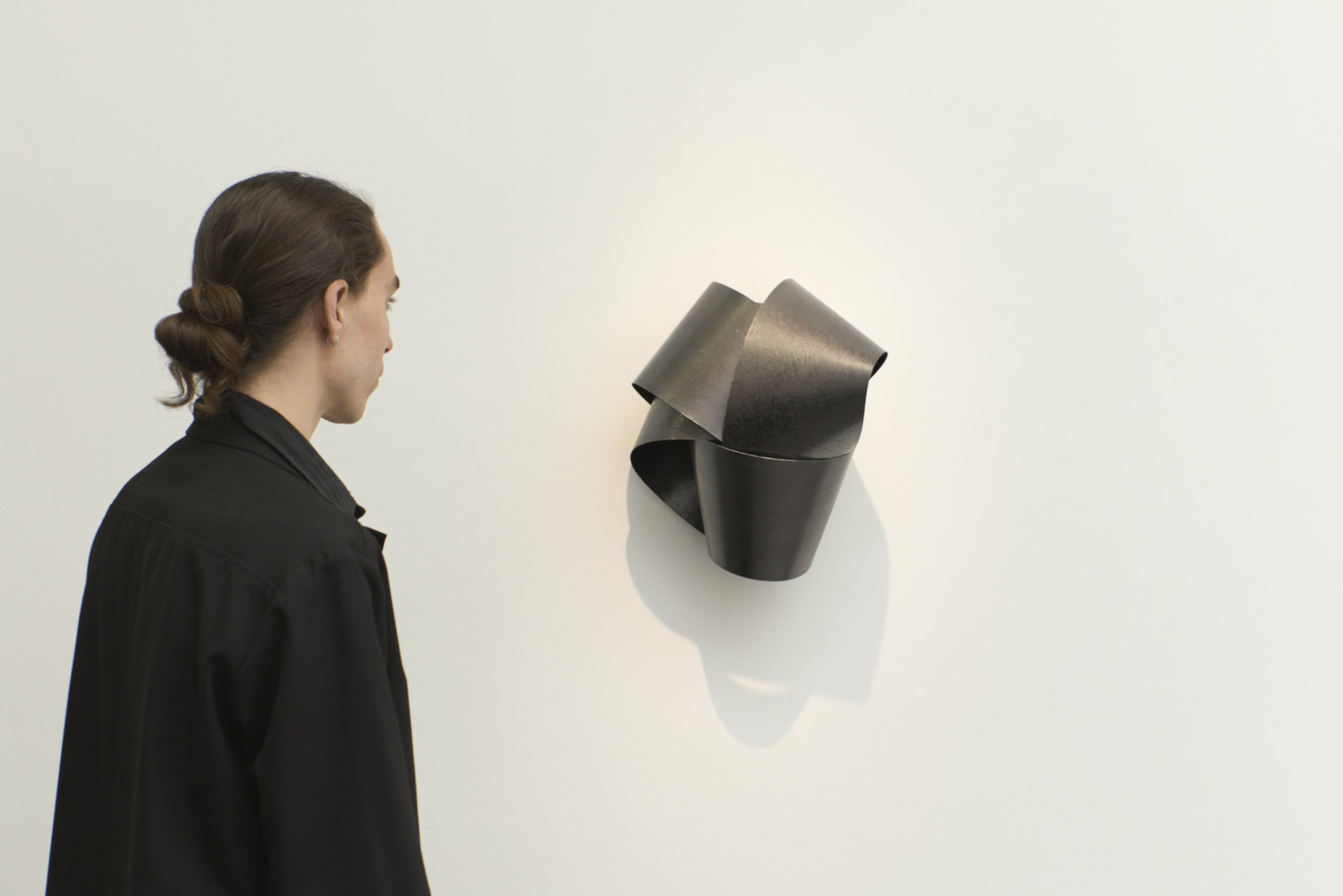
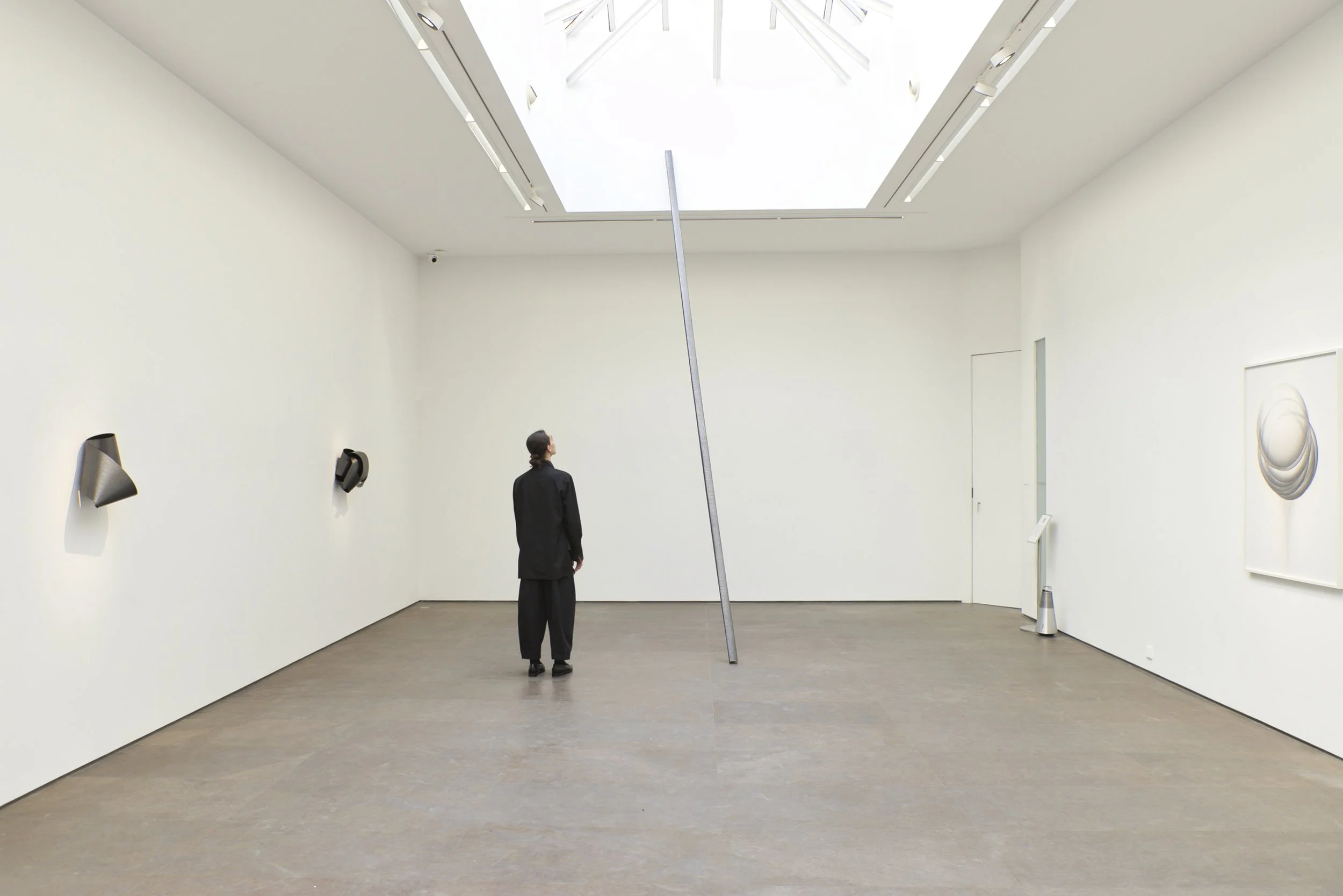
This approach resonates with the legacy of Minimalist sculpture in its attention to material and form. Yet where Minimalism often asserted clarity (like Frank Stella’s “what you see is what you see”), Pimentão introduces a productive ambiguity. His works appear deceptively simple, yet they are the outcome of sustained, labor-intensive processes. Sheets of paper, densely worked with graphite, take on a metallic sheen before being folded, layered, and arranged into structures that evoke steel or iron. These forms frequently engage directly with the exhibition space, altering the viewer’s sense of scale, depth, and weight.
Across the exhibition, drawing is activated through movement, tension, and spatial interaction. In certain works, graphite is set in motion without the direct touch of the hand, propelled across the surface through vigorous, almost choreographic gestures. Elsewhere, folded structures stand upright, echoing both architectural elements and human presence. The line extends beyond the page, becoming a physical entity that inhabits and redefines space.
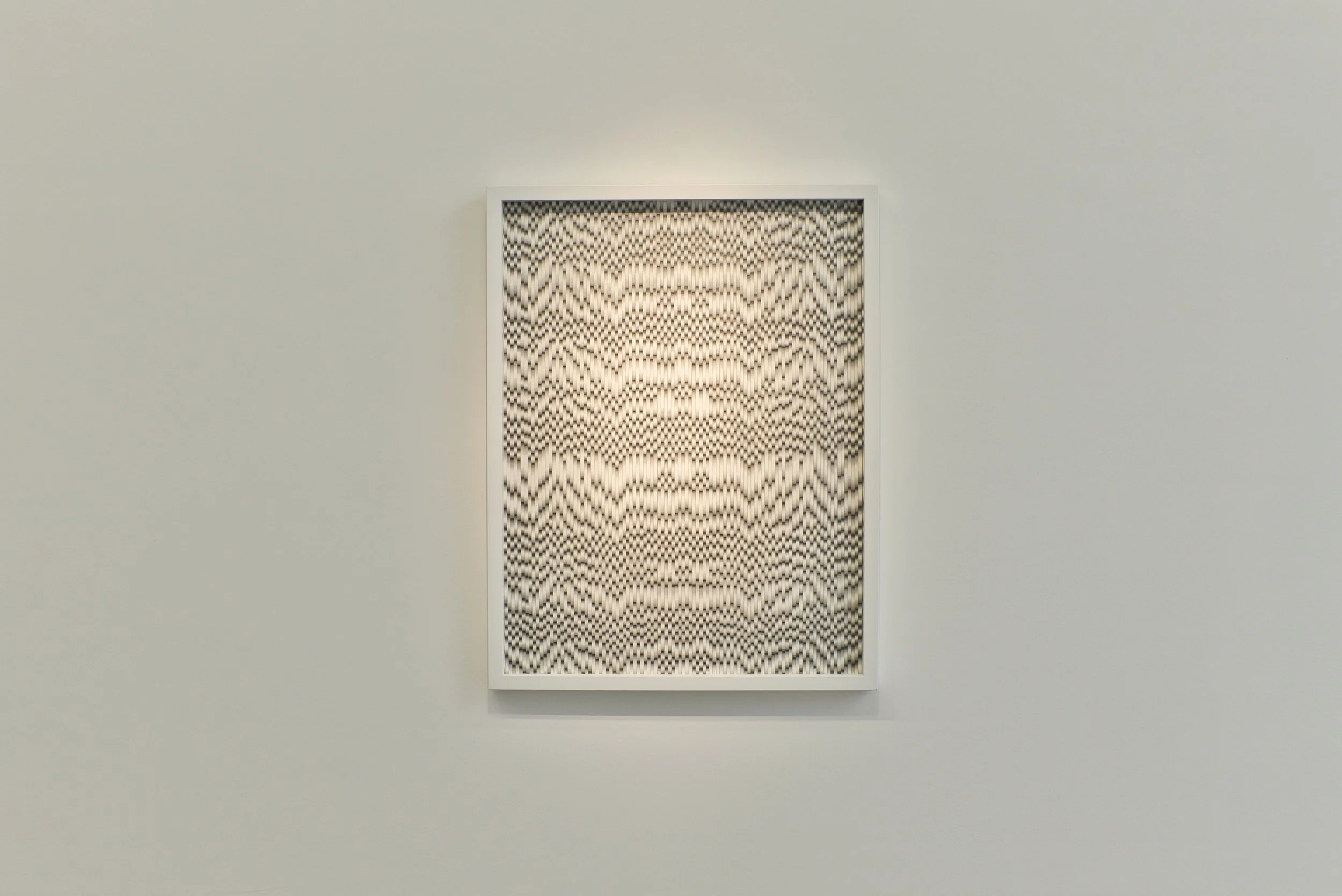
The relationship between materials is also continually reexamined. Expectations (paper as fragile, cement as solid) are unsettled. Balance, pressure, and form reveal unexpected strengths and vulnerabilities, suggesting that matter itself participates in a kind of choreography. Folding, bending, knotting: these gestures draw equally from domestic knowledge and from the inherent behavior of materials, producing forms that hold, connect, and transform. Sound, rhythm, and residue also play a role. The remnants of previous drawings are reactivated, their traces reorganized into new patterns that suggest a latent musicality. The works carry within them the memory of their making, as if each mark were both a record and a continuation.
Pimentão’s practice ultimately proposes an expanded field of drawing. It invites viewers to move, to look closely, and to reconsider the nature of what they perceive. What seems solid may be fragile; what appears simple may be complex; what reads as surface may in fact be volume. The work’s presence unfolds fully only in our own.
Diogo Pimentão (Lisbon, 1973) lives and works in London. His work is held in major institutional collections, including the Centre Georges Pompidou in Paris, the Calouste Gulbenkian Foundation in Lisbon, the Serralves Foundation in Porto, and the Museum of Old and New Art in Australia, among others. His exhibitions have been presented internationally, reflecting a practice that continues to challenge and redefine the possibilities of drawing.